
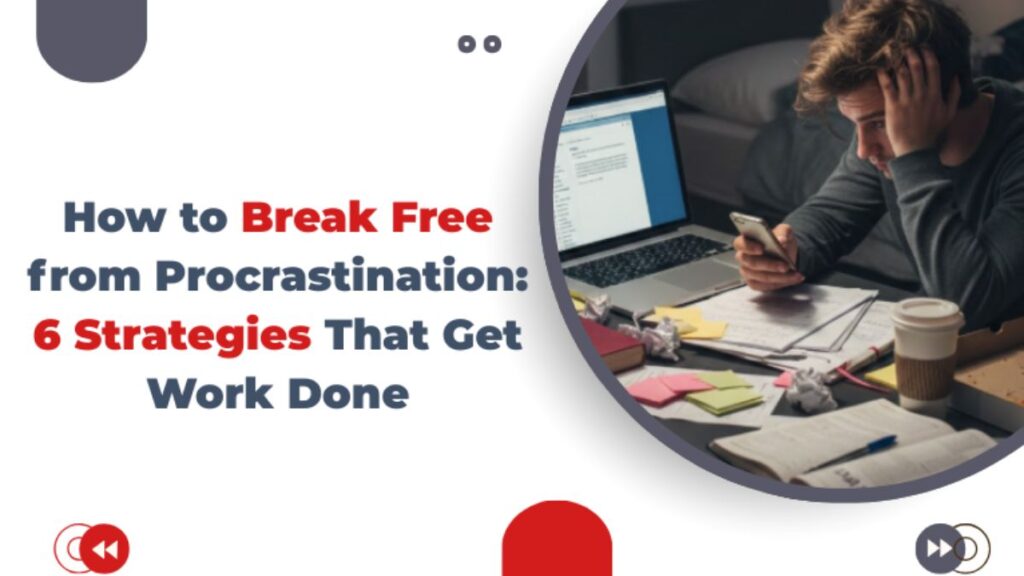
You have a major assignment due in three days, but somehow you’re reorganizing your desk, scrolling through social media, or suddenly developing an intense interest in cleaning your room. We have all been there. Procrastination is perhaps the most universal student experience, but it does not have to be a permanent condition.
As someone who has both struggled with and studied procrastination, I have learned that beating it isn’t about willpower or self-discipline alone. It’s about understanding why we procrastinate and implementing practical strategies that work with psychology, not against it.
Why We Procrastinate and Why It’s Not about Being Lazy?
Before we look for the solutions, let’s debunk a myth: procrastination is often an emotional regulation problem and not being lazy. We avoid tasks that make us feel anxious, overwhelmed, or uncertain about our abilities. That essay feels intimidating, so our brain seeks the immediate relief of doing something better. But what if there is an expert who might help you with your coursework? Getting Online Class Help makes sure that your work is completed before the deadline, and you don’t have to suffer because of your procrastination issues.
Understanding this is crucial because it means the solution isn’t just to force yourself to work, which rarely works for the long term. Instead, we need to address the emotional barriers that make the task feel so difficult to start.
Now, let’s check out the strategies.
1# The Two Minute Rule: Your Secret Weapon
Here’s a strategy that has transformed how I approach assignments: commit to working for just two minutes. Not two hours. Two minutes.
The genius of this approach is that it removes the emotional weight of “starting a big project.” Anyone can do something for two minutes. What you will often find is that once you have started, continuing feels much easier than stopping. The hardest part of any assignment is beginning, and the two-minute rule eliminates that barrier.
When I have a research paper looming, I tell myself I’ll just open the document and write one sentence. Usually, I end up writing for 20 or 30 minutes because the activation energy has been overcome.
2# Break It Down Until It Feels Manageable
Large assignments feel overwhelming because our brains struggle to process vague, enormous tasks. “Write a 10-page research paper” is paralysing. “Spend 15 minutes finding three potential sources” is doable. I took the help of an expert from Take My Online Class, who was generous enough to help me even at 2 AM. The experts provided me with great guidance to complete my math homework. The expert also helped me in the long run in life, like providing me with tips to manage my coursework. I will share it with you here. So, try this exercise: Take your next assignment and break it into the smallest possible steps. If you are writing an essay, your breakdown might look like this:
- Teread the assignment prompt
- Brainstorm three possible topics
- Choose one topic and write three questions you wnat ot explore
- Find two academic sources that address these questions.
Suddenly, instead of one impossible task, you have several small, concrete actions. Each one you complete gives you a sense of progress, which motivates you to continue.
3# Create Implementation Intentions
Saying “I’ll work on my assignment tomorrow” rarely works. Your brain needs specificity. Instead, create what psychologists call implementation intentions: specific plans that follow an if-then format.
Instead of “I’ll work on my essay tomorrow,” try “Tomorrow at 10 AM, right after my morning coffee, I will sit at my desk and spend 30 minutes outlining my essay.”
This approach works because it removes the need to make decisions in the moment. When 10 AM arrives, you don’t have to decide whether to work or what to do first. You simply execute the plan you have already made.
4# Change Your Environment
Your environment shapes your behaviour more than you realise. If you always procrastinate when working in your bedroom, that space has become mentally associated with distraction. Your brain literally expects to procrastinate there.
Find a new location specifically for focused work. This could be a library, a quiet coffee shop, or even just a different room in your house. Over time, this space becomes a cue that signals to your brain it’s time to focus.
I have a simple rule: my bed is for sleeping, my desk is for working. When I sit at my desk, my brain knows what’s expected.
5# Use Procrastination Strategically
Here’s a counterintuitive tip: use productive procrastination. If you are avoiding your most important task, at least avoid it by doing your second most important task.
I keep a list of smaller academic tasks that need doing: organizing notes, responding to emails, and reading a chapter ahead. When I am resisting my main assignment, I permit myself to procrastinate by doing one of these instead. I’m still being productive, and often, after completing a smaller task, I feel motivated enough to tackle the bigger one.
6# The Compassion Component
Perhaps most importantly, be kind to yourself when you procrastinate. Self-criticism makes procrastination worse because it adds another negative emotion ot the task. If you beat yourself up about procrastinating on your assignment, now you are avoiding both the assignment and the bad feelings about yourself.
Instead, acknowledge what happened without judgment and refocus on the next small step. “I procrastinated today, and that’s okay. What’s one small thing I can do right now to move forward?”
Finally, Making It Stick
These strategies work, but only if you actually use them. Start with just one technique from this list. Master it over the next two weeks before adding another. Small, consistent changes create lasting habits far better than trying to overhaul everything at once.
Remember, overcoming procrastination isn’t about becoming a productivity machine. It’s about reducing the unnecessary stress and anxiety that comes from constantly putting things off. It is about creating a healthier, more balanced relationship with your academic work.
The next time you find yourself avoiding an assignment, pause and ask: What’s making this feel difficult right now? Then choose one strategy from this guide and give it a try. You might be surprised at how much easier it becomes to simply begin.